Replacing the line with less digging
Trenchless Water Line Replacement in Orange
You need a new water line but dread losing the lawn, the driveway or the old oak out front. Call and we dispatch a local pro who can say whether a trenchless approach is realistic on your property.
- Calls answered 24/7
- Same-day dispatch where available
- Upfront pricing before work begins

Most homeowners facing a failed service line picture a long ditch running from the street to the house. Trenchless work is the alternative people ask about next: a method that replaces the pipe from a couple of small openings, leaving the lawn, patio or driveway in between largely undisturbed.
It is a real option, but not a universal one. Soil, depth, the condition of the old pipe and other buried lines all decide whether it will work, and it is not always cheaper either. This page explains the methods in plain terms, the situations where they shine and the ones where a conventional trench is still the honest answer.
Trenchless, explained for a home water line
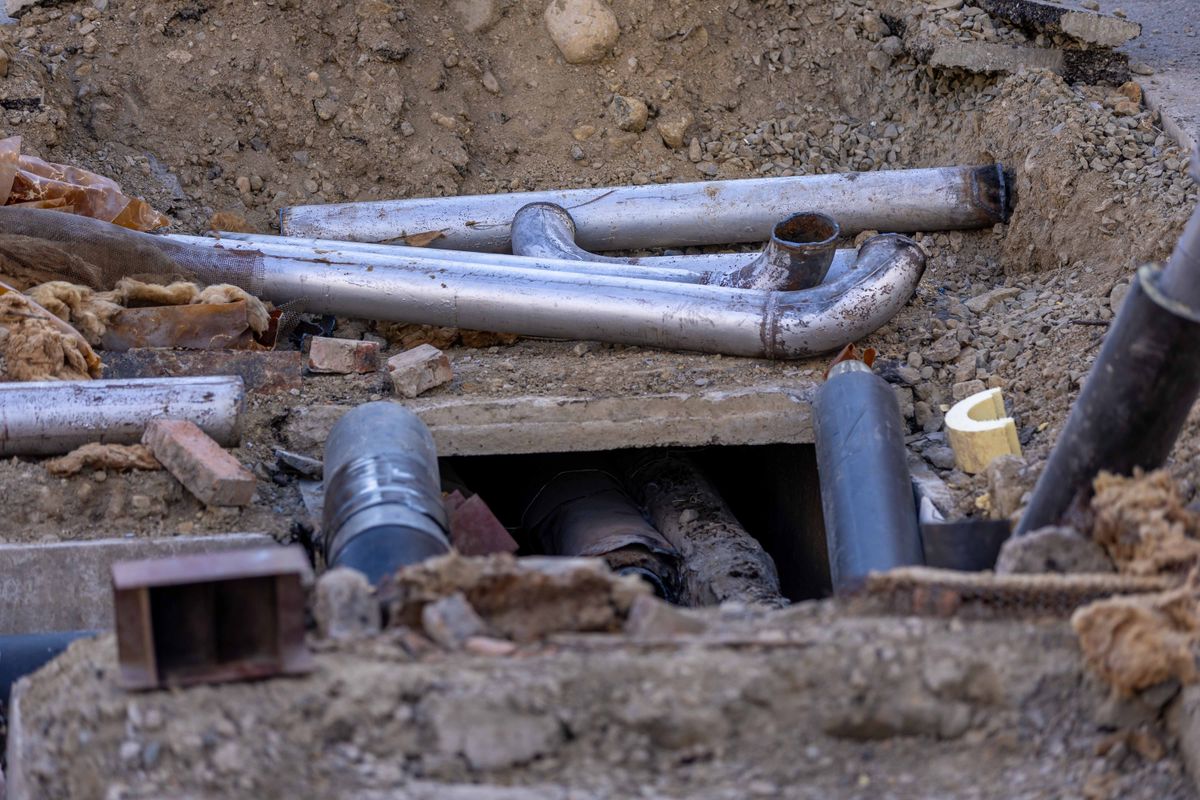
The word covers several ways of installing buried pipe without opening a continuous trench. The crew digs a small entry pit near the meter or street end and an exit pit near the house, then pulls or pushes the new pipe through the underground path between them. What you see afterward is two patched openings instead of one long scar.
Not every pipe-replacement job suits this, and not every contractor offers it. The technician we dispatch will tell you whether it is on the table for your address or whether the route needs to be opened. If the old pipe turns out to be fine except for one spot, a plain repair might spare you the question altogether.
Two approaches: breaking the old pipe or drilling a new path
In pipe bursting, a tool is pulled through the existing line, splitting or pushing it outward into the surrounding soil while the new pipe follows right behind in the same channel. It works along the old route, so it needs that route to be reasonably clear and straight.
Directional boring is different. A drill head creates a fresh path, steered underground along a planned line, and the new pipe is drawn back through it. That lets the crew go around obstacles or choose a cleaner route than the old one. Either way, the pro picks the method after assessing the soil, how the old pipe runs and what else lies below the surface.
Where trenchless fits, and where it runs out of road
It tends to suit lots with finished surfaces in the way: poured driveways, patios, stamped concrete, mature planting and long straight runs. The more costly and disruptive the surface, the stronger the case for working underneath it.
Limits are real, though:
- Old pipe that has collapsed or bent sharply can stop a bursting tool.
- Rocky or highly mixed ground can make boring unpredictable.
- Crowded underground utilities may leave too little clearance.
- Very short runs can cost about the same either way, so there may be little to gain.
An honest technician will tell you when trenching is simply the better tool for your line.
Entry and exit pits: how many, how big, where
Typically the crew needs one pit where the new pipe will connect near the meter or curb and another close to the house. If the run bends, passes under a driveway or has a branch, extra pits may be added. Their size depends on the equipment and pipe, and the pro will mark them out before digging so you can see which plants or pavers are affected.
Good placement matters. Pits are often put in a flower bed, a strip of lawn or an expansion joint rather than across the middle of a planted area. Mentioning sprinkler lines, low-voltage lighting and tree roots up front helps the crew choose spots that do the least harm, and locating other buried lines first is a standard part of the process.
Hardscape, slopes and old trees: the lots that benefit
Mature trees are a classic reason to choose trenchless, because a trench near the trunk can sever roots the tree needs. Boring or bursting can pass beneath root zones, though a crew still has to be careful and cannot rule out root contact. Hardscape works the same way: a driveway or retaining wall sitting on top of the route can often be left alone.
Hillside lots add their own challenges, since steep ground, slope stability and walls complicate any excavation, and trenchless can limit how much hillside has to be opened. It still depends on the slope and soil, and in tight spaces equipment access may be the deciding factor.

What a trenchless job looks like on Orange properties
In the older core of El Modena, a mix of long-established homes and later tracts means lines of different ages, and many yards have mature landscaping that owners would rather not lose. Trenchless is often worth asking about there, particularly if you have discovered that your line is made of an older material, as covered on our page about older galvanized and lead-era service lines.
On the hillside tracts further east, such as Santiago Hills, slopes, shared landscaping and paseo edges make surface disruption a bigger concern than the pipe itself. The older central streets bring tight side yards and street trees, while mid-century tract lots usually have simple, level approaches where either method can work.
Checking the old line before choosing a method
A responsible pro does not commit to trenchless sight unseen. A camera run, or at least a thorough look at where the line enters and exits, helps judge whether the pipe is intact enough for bursting and straight enough for the route. Locating the actual path also reveals whether another utility sits in the way.
If you are not sure the line is the source of your trouble in the first place, a leak locating visit comes first; our page on finding underground leaks shows how that works. Ask the technician to explain why a method was chosen, what could change the plan on the day and what is included for surface restoration.
Trenchless replacement: what people ask us
No. It depends on the soil, the condition and path of the old line, nearby utilities and how much room there is for equipment. Some lines are too damaged or too twisted for bursting, and some ground makes boring unreliable. The technician decides after looking at your property. When trenchless is not workable, a conventional trench is still a sound way to do the job.
Not always, and not always less either. The equipment and setup can raise the base price, but avoiding the repair of concrete, landscaping or hardscape can bring the total down on some lots. On a short, open run with nothing in the way, a trench may be cheaper. Ask for both options to be priced and compare what each includes, since surface restoration often makes the difference.
They are much smaller than a full trench but not tiny; think of a hole big enough for a person to work around the pipe and equipment, not a keyhole. The exact size depends on the method, the pipe and the depth of the line. The crew will show you where each opening will go before digging, so you can move anything you care about out of the way.
Often, yes, which is among its biggest advantages. The pipe can pass beneath a slab or around a root zone without opening the surface, though the route must be clear of obstructions and roots can still interfere. A crew cannot promise zero contact with roots. If a particular tree or driveway matters to you, point it out on the first call so the plan can account for it.
The material and workmanship matter more than the method. The pipe used in either approach is chosen for the lot, and a well-executed bore or burst should perform comparably to a trench installation. We cannot quote a lifespan for any pipe, since soil and installation conditions vary. Ask the pro what material is proposed and how the connections are made, which tell you more than the method name.
Collapsed or sharply bent old pipe, rocky or inconsistent ground, a crowd of other buried lines and lack of space for equipment can all rule it out or complicate it. Sometimes the problem only shows up once the crew is on site, so the technician may mention a fallback to trenching. Asking beforehand how that would change the scope and price avoids surprises.
It is often quicker on site than a full excavation since less ground is opened and less backfill and restoration is needed, but the actual time depends on run length, pit count, soil and what the crew meets underground. We will not name a duration. Ask the technician for an estimate for your property, and keep in mind that water will be off at some point while the new line is connected.
Some, yes. You will have at least two openings, usually at the meter end and near the house, plus space for equipment and spoil. The area between them is usually left alone. Turf at the pits can be replaced afterward, though it takes time to settle. If your yard is a priority, ask how the crew protects grass and where equipment will be set up.