Low pressure diagnosis
Low Water Pressure From the Main Line in Orange
When every tap in the house runs weak, the cause is rarely the faucets. We connect you with local pros who trace the restriction, often in the buried line, and explain what fixes it before work begins.
- Calls answered 24/7
- Same-day dispatch where available
- Upfront pricing before work begins

The shower that used to pound now dribbles. The washer takes forever to fill, and running the kitchen sink while someone showers leaves both gasping. When weakness appears everywhere at once, the problem is almost always upstream of the fixtures, somewhere along the path water takes to reach the house.
That path begins at the meter and ends at your main shut-off, and what sits in between is the service line. If it has narrowed, partly failed or been undersized from the start, no amount of fixture tinkering will help. But it is not the only suspect. A good diagnosis checks the cheap, simple explanations before recommending an excavation.
The sections below explain how to tell a house-wide problem from a single bad fixture, why a worn line chokes flow, what else gets ruled out, and when replacement is the honest answer. For the pipe-age side of the story, read about older galvanized and lead-era lines; for the valve that sits in the same stretch, see curb stop and main shut-off valves.
One weak faucet or the whole house?
The first sorting question is how widespread the weakness is. A single fixture that trickles while the rest are fine points at that fixture: a clogged aerator, a partly closed stop under the sink, a worn cartridge. That is a small repair and has nothing to do with the main line.
If hot water is weak but cold is normal, the water heater side is suspect. If the weakness is the same at every sink, shower and hose bib, hot and cold alike, the supply feeding the whole house is not delivering what it should.
Tell the dispatcher which taps, hot or cold, and whether it comes and goes through the day. Those details shorten the list of likely causes.
How a worn line throttles the flow
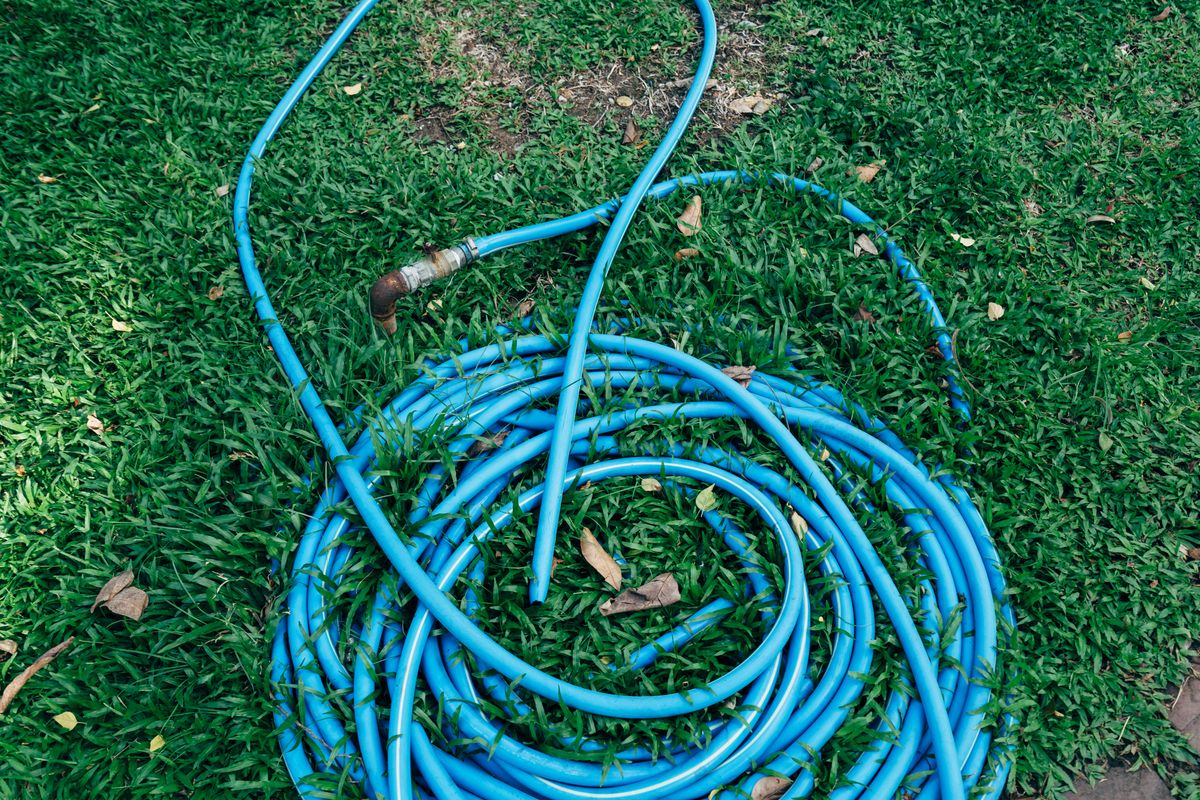
Think of the service line as a hose. Flow depends on how open the passage is, and anything that narrows it cuts how much water arrives, however strong the push behind it.
In older steel pipe, corrosion builds up on the inside wall and shrinks the opening a little more each year. Mineral deposits and scale add to it. In other lines, a crushed or kinked section, a collapsed joint or a leak that bleeds off flow before it reaches the house produce the same symptom. A line sized for the house as first built may also fall behind after additions.
This kind of loss usually creeps.
The other suspects the technician clears first
Before anyone recommends digging, the pro eliminates simpler explanations. The usual list:
- A pressure regulator at the entry point that has drifted out of adjustment or worn out, if the home has one.
- A main valve that is not fully open, or an old gate-type valve whose internal parts have partly failed.
- Clogged strainers, filters or fixtures that restrict a single branch rather than the whole house.
- Supply conditions on the provider's side, including temporary work or demand in the neighborhood, which the provider can explain.
If the cause sits on the provider's side of the meter, you hear that early, before spending anything on private work.
How the diagnosis is run
A methodical check goes from the house outward. The technician compares the pressure available at an outdoor spigot or the entry point with what a fixture delivers, measures flow when several outlets are open, and watches how the reading changes. A big drop between two points localizes the restriction to the stretch between them.
The same visit usually includes a look at the exposed pipe, the valves and the meter connection, and a quick test to see whether the meter moves with everything off, since a leak and a restriction can overlap. Our page on finding buried leaks covers that overlap.
You should come away knowing where the restriction is, how sure the technician is, and what each option would involve, with pricing laid out before any work begins.
When replacing the line is the real fix
Sometimes the diagnosis lands on the pipe itself. If the line is heavily corroded, undersized, damaged or leaking in several places, new pipe restores the full opening and ends the guesswork. Patching a narrowed pipe seldom helps because the restriction runs along its length.
That conclusion is not automatic and should never be assumed from the phone. When it is warranted, the technician will walk you through the options, including whether a trenchless route could suit the lot, and what the work involves. The full sequence is described on our replacement day guide page.
Replacement improves flow when the old pipe was the bottleneck. It cannot overcome conditions outside your property, which is another reason the earlier tests matter.

Orange lots, hills and decades of plumbing
Pressure complaints in Orange follow the housing pattern. In the mid-century tracts of the central and northern parts of town, many homes still have original copper or galvanized pipe at or beyond the age where narrowing is common. Eichler homes add a slab and a layout where the entry point is not always where you expect, so slab homes need a careful routing plan. See the page on the Eichler tracts for more.
The eastern hillside communities have a different story. Elevation alone changes the pressure a house sees, and homes higher on a slope sit farther from the supply than neighbors below them. The technician separates the effect of the lot from a problem in the line. Details for Santiago Hills explain the terrain.
Older central neighborhoods are where the oldest pipe tends to be, and densely built pockets near the freeways can have shared or tightly packed runs that complicate the picture.
Boosters, regulators and quick fixes
A pressure booster is a pump that pushes more water through the pipe. It can make a difference when the supply is truly weak, but it does not clear a narrowed line, and pushing harder on a worn pipe may stress it. Treat a booster as something to discuss after the cause is known, not as the first answer.
Adjusting or replacing a regulator is a legitimate fix when that part is at fault. The point of the diagnosis is to tell which of these situations you are in, so that the money goes to the right component.
Questions about weak water flow
When every outlet runs weak, the restriction is usually upstream of the fixtures, in the pipe that brings water in, in a valve or regulator at the entry point, or in the supply itself. A single weak fixture points to that fixture instead. The technician we dispatch tests at the entry point and at the fixtures to find where flow drops, which separates a line problem from the other possibilities.
Yes. A line sized for the home as first built can fall short after additions, extra bathrooms or more people living there, particularly if the pipe has also narrowed with age. The result is weak flow when several fixtures run together. A technician can assess whether size, condition or both are at fault, and a larger replacement line is one option if the answer is size.
A pro can often tell by testing at the meter and at the house. If flow is normal at the meter and falls off between there and your shut-off, the issue is on the private side. If it is poor at the meter itself, your provider needs to look. Where the responsibility line sits varies, so ask your water provider about your address.
Only sometimes. A booster adds push, which helps when the supply is simply weak. It does not reopen a corroded pipe, and extra force on a worn line is not always a good idea. Most pros diagnose first, then decide whether a booster, a regulator adjustment or a new line is the right response. Buying one before knowing the cause can cost money without changing much.
A sudden drop deserves attention. Possibilities include a valve that was partly closed after other work, a regulator failing, a new leak on the line or a change in the supply. Check whether the meter moves with everything off using the 30-minute test, then call and describe when it started. Sudden changes are easier to trace than slow ones, because the timing narrows the options.
It can. Elevation affects the pressure a home sees, so a house higher on a slope may get less than one at the bottom, and long runs up a hillside add friction losses. That is normal behavior rather than a defect. The technician will tell the difference between an elevation effect and a restricted pipe, and say what, if anything, is worth doing about each.
Usually the simplest things: how many fixtures are affected, how flow compares at an outdoor tap and indoors, and whether the main valve and any regulator are working properly. After that comes a check of the meter for leakage and a look at the visible pipe. Starting with these tests rules out inexpensive causes before anyone suggests excavation.
By itself, usually not. It is more of an urgent nuisance and a warning sign. It becomes more pressing if the meter shows a leak, if you see water pooling outside, or if pressure vanishes entirely. In those cases close the main shut-off and call. If you are unsure, describe what you see to the dispatcher and they will help you judge how quickly to act.