Referral service: calls are connected to independent local professionals who do the work. Read the disclosure.
Call-only dispatch for Orange homes
Main Water Line Replacement in Orange, CA
Something is wrong with the pipe between the street and your house. Call, describe what you see, and get a straight answer from a person who then sends a local technician who knows Orange homes.
- Calls answered 24/7
- Same-day dispatch where available
- Upfront pricing before work begins
Calls answered 24/7 in Orange
Sound familiar?
- 01A soggy or oddly green lawn stripGrass between sidewalk and door stays wet or greener than the rest, even with sprinklers off.
- 02The meter spins with everything offEvery tap and appliance is closed, yet the dial or leak indicator keeps turning.
- 03Pressure fell throughout the houseShowers, kitchen and hose bibs all feel weak at once, pointing toward the line rather than one fixture.
- 04Rusty or brown water that lingersThe tint does not clear after running a tap and shows at several faucets.
- 05A hiss where the pipe entersA faint hissing or humming near the wall or slab where the line comes in.
- 06A bill that jumped for no reasonUsage on the statement climbed sharply with no change in habits.
- 07Water standing at the meter boxThe lid or pit near the curb holds water that returns after it is cleared.
- Seeing one of these? Talk to someone nowDescribe the problem, we will dispatch
How a call works
- You callA live person picks up at any hour and listens to what you are seeing.
- We ask a few questionsAge of the home, where symptoms show, what the meter is doing.
- A local technician is dispatchedAn independent pro who works your part of Orange heads out, same day where available.
- Options and pricing, then workYou hear the choices and the upfront price before anything is dug or connected.
Why the street you live on changes the answer
Orange, a city of about 142,000 people, was not built all at once. A bungalow near the Plaza and a hillside tract need different answers.
The pre-war streets of Old Towne Orange hold some of the longest-serving pipe in town. The 1950s and 1960s slab tracts, including the Eichler neighborhoods of Fairhaven, Fairhills and Fairmeadow, carry original copper or galvanized lines, and slab homes need a careful routing plan; see the Eichler tracts.
East of center, El Modena blends older streets with later tracts, so pipe age can change block to block. Farther up, Santiago Hills, Serrano Heights and the Orange Park Acres area bring long runs, slopes, retaining walls and landscaping that make a trench costly; trenchless gets a serious look there.
In the denser west and north, near the freeway interchanges and the Anaheim border, Olive and Olive Heights mix older tracts with apartments and townhomes, where shared lines and tight setbacks complicate things.

Who is responsible for which stretch of pipe
In most arrangements the homeowner usually carries the private side, the stretch that begins at the meter or curb stop and ends at your foundation, while the provider takes the street main. The boundary shifts from place to place, so check with your water provider before assuming.
If the meter spins and the lawn between curb and porch is wet, the trouble is probably on the private side. A leak at the meter pit or beyond it may involve the provider instead.
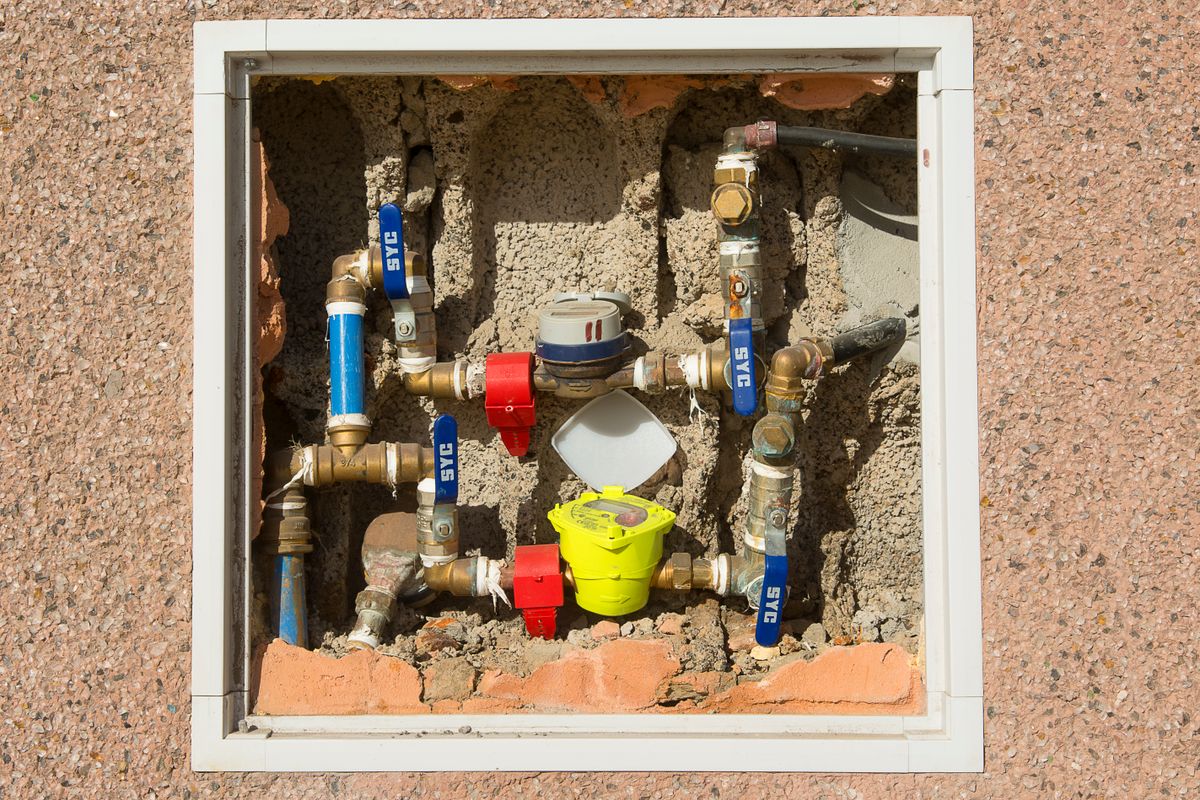
Valves sit right on the boundary. Your indoor shut-off is yours; the curb stop is often coordinated with the provider. If a valve will not move, read about curb stop and main shut-off valves. A hidden leak calls for underground leak detection.
Digging a trench or going trenchless
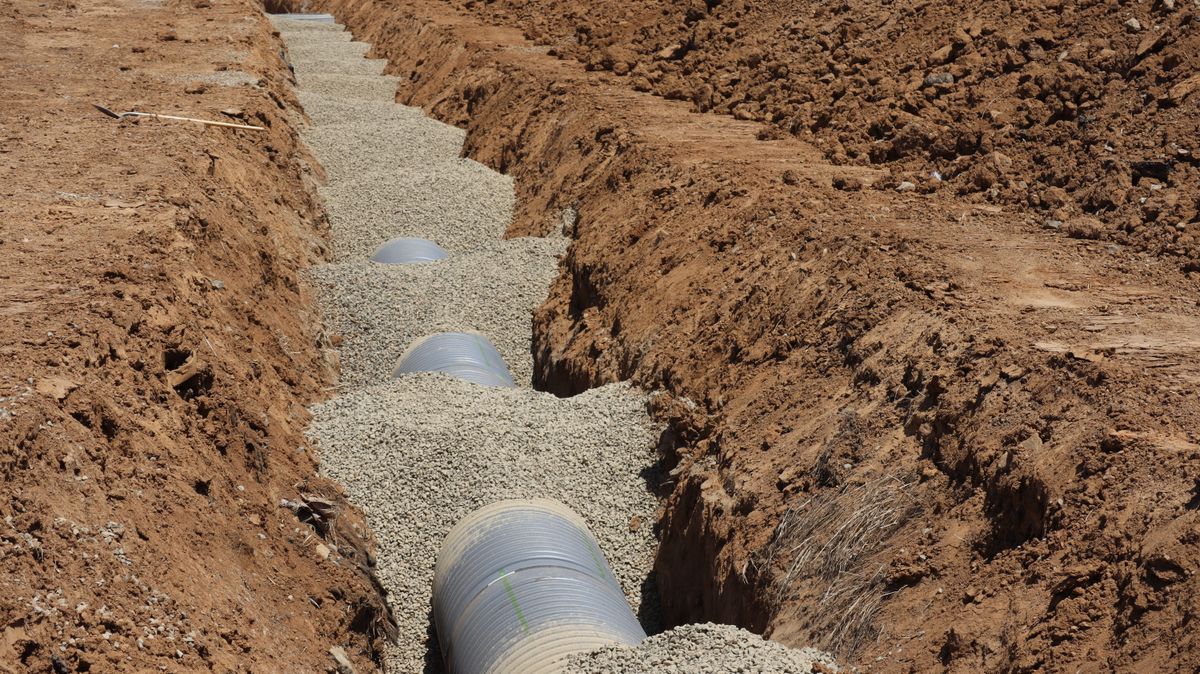
There are two broad ways to install a new line. Open trenching exposes the old pipe along its length. Trenchless work digs a few access pits and pulls or pushes the new line through the ground between them.
It earns its place where the surface is hard to restore: a driveway you want to keep, a mature tree with roots you would rather not cut, a retaining wall, or a long run across a sloped yard. It is not always possible, though. Unusual soil, tight bends, a badly damaged old line or other buried utilities can force a conventional trench.
Trenchless is not automatically cheaper; landscaping savings may or may not offset equipment costs. Only a technician walking the property can compare both routes with upfront pricing. Details live on the trenchless replacement page, and the replacement day guide page covers a full swap.
Older pipe and the age of your home
Generally, the older the home, the more time its original line has had to corrode, loosen at joints or clog with mineral buildup.
Pre-war homes may still be fed by galvanized steel, or by early copper that was a modern upgrade in its day. Mid-century tracts often began with copper or galvanized too.
Some older lines were made of lead, and a pro can identify the material. For water-quality questions, speak with your water provider. Our guide to old galvanized and lead-era service lines shows what pros look for, and low pressure from the main line covers the symptom that often leads people there.
What we can send help for
Why call through us
- Calls answered 24/7Pipes fail at night and on holidays. Someone picks up.
- Same-day and emergency dispatch where availableWhen a technician is open in your part of Orange, we get them moving.
- Upfront pricing explained before work beginsYou learn the numbers and scope while you can still say no.
- No hidden feesNo surprise line items turn up after you have agreed to the work.
- Ask the independent service provider about any warranty that applies to your job.Ask the independent service provider about any warranty that applies to your job.
- Technicians who know Orange homesThey know a Plaza-area bungalow from a hillside tract.
- Straight answers on the phoneIf it sounds like a simple valve or is outside our scope, we say so.
Neighborhoods across Orange
Questions Orange homeowners ask
Start with the meter test: photograph the dial, avoid all water use for 30 minutes, then photograph it again. If the reading moved, water is going somewhere, and a wet strip of yard or weak pressure throughout the house makes the buried line a likely suspect. A technician confirms it on site, since an indoor leak can show the same signs.
Usually the private side, from where the provider's equipment ends to your house, falls to the homeowner, and the street side to the water provider. Arrangements differ by property, so check with your water provider. If it is a close call, describe where the water shows up and the dispatcher will help you work out whom to ring first.
No. We are a referral service that answers the phone and connects you with independent local pros who perform the work. Ask the independent service provider about any warranty that applies to your job. The about page explains how referrals work, including how we answer calls, how technicians are matched to your area and what happens once someone is dispatched.
Yes, in most cases. Pricing is explained upfront, before work begins, once the technician has seen the situation. Nobody can responsibly name a figure for buried pipe without knowing the route, the surface above it and the method, so the call explains the process and the site visit supplies numbers you can accept or decline.
Not necessarily. A short spot repair can leave a small hole, and on lots with driveways, mature trees or hardscape a trenchless approach may reduce the digging to a few access pits. Some sites need a full trench. The technician explains the likely disturbance for your property before you agree to anything, including how lawn, plants and paving would be handled afterward.
If water is escaping and you can find the main shut-off, closing it is the safe move while you wait. If the valve is stuck or leaks when turned, stop forcing it, since a seized valve can snap, and tell the dispatcher so a pro can bring the right parts. There is more on main shut-off valves if yours gives trouble.
Age is the biggest clue, but not the only one. Older homes usually have older pipe, and mid-century houses may still run on original copper or galvanized. A technician judges on site whether replacement beats repair. We never promise that a repair will prevent a later failure, and a good pro will not either; they will tell you what they see in the pipe.
Yes. Those are the places where long runs, slopes and retaining walls influence the choice of method most. Santiago Hills, Serrano Heights and the Orange Park Acres area have their own pages, and we send technicians used to such lots, because hillside access, slopes and long runs call for a different plan than a flat city lot. The area overview helps you find yours.
We say so on the call when we can. Sometimes the cause is a fixture, a regulator or something indoors, and indoor plumbing falls outside what this service covers. If the dispatched pro finds that on site, they tell you plainly instead of selling a line replacement you do not need. You then know what kind of help to look for, which saves a wasted visit and a confusing bill.